The new financial year has started, and with it the pressure on CFOs and finance leaders to address operational risks before they impact revenue, compliance, and business continuity.
IT outages are widely recognised as a risk at board level, but the scale of the financial exposure – and the technical factors that cause them – are often harder to see. Recent industry research shows that unplanned IT downtime now costs an average of over $14,000 per minute, rising to over $23,000 per minute for large enterprises.
While outages are often seen as technical incidents, their consequences are vast. Service disruption can lead to lost revenue, regulatory scrutiny, remediation costs, and reputational damage – particularly in regulated sectors.
Recent figures also highlight the scale of the challenge in the regulated sector. Nine major UK banks and building societies recorded 33 days of unplanned downtime over the past two years, demonstrating how even well-resourced organisations struggle to maintain stability across complex technology estates.
For finance leaders responsible for risk oversight, the question is no longer whether outages occur, but how much financial exposure they create when they do.
The hidden cause of outages
Many outages do not begin with dramatic system failures. Instead, they start with small changes inside complex IT environments.
Software updates, infrastructure modifications, and security patches are applied every day across large estates. Over time, these changes can accumulate in ways that are not fully recorded or authorised – and become a catalyst configuration drift. Our State of Technical Debt Report found that 70% of organisations regularly experience configuration drift, allowing operational risk to build unnoticed until systems begin to fail.
Too many major incidents have illustrated how small changes can trigger major disruption. For example, a faulty configuration update from cybersecurity provider CrowdStrike caused millions of Windows systems worldwide to crash, disrupting airlines, banks, hospitals and other critical services.
The problem was traced back to a defective update file distributed to endpoint security software, demonstrating how a single change can cascade across interconnected technology environments.
Making operational risk visible
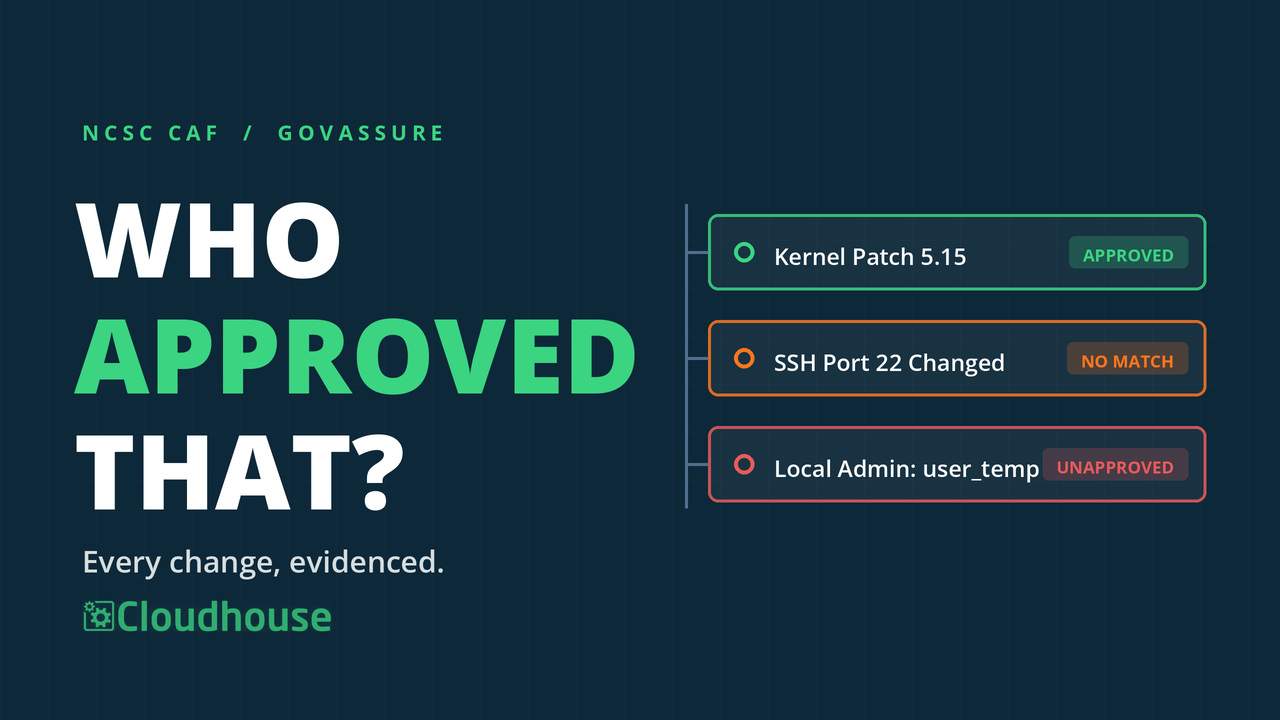
As regulatory expectations around operational resilience continue to rise, organisations are under increasing pressure to demonstrate control over their technology environments. This means being able to answer key questions when incidents occur: what changed, when it changed, and whether the change was authorised.
To help organisations identify and address this hidden risk, we’ve launched the Drift Detection Audit. Powered by Guardian configuration-monitoring technology, the Audit provides a consolidated view of configuration changes across complex IT estates, surfacing unauthorised or unexpected changes and producing audit-ready evidence of system state.
By making configuration drift visible, organisations can detect instability earlier, reduce the likelihood of outages and strengthen operational resilience.
As digital services underpin more critical business functions, understanding what is changing inside the IT environment is no longer just a technical concern – it is an essential part of managing financial risk.
Interested in finding out more? Get in touch here.