The whole world is dependent on telecommunications companies. The use of our mobile phones and the internet has become indispensable to modern life. There are nearly 9 billion mobile phone subscriptions globally and, in the last census, 93% of households in the UK said they had access to a mobile. Without this connectivity, society would fall apart. Telco companies, as a result, have become incredibly large and dominate particular geographical regions, meaning consumers are reliant on a select few providers.
These telcos operate in the public eye. So, when things go wrong, they tend to go wrong in a very visible way. The trouble is telcos are so large, with so much activity taking place across many offshoots and branches, that they’re almost entire economies in a single organisation.
Due to never-ending technological advancements, they’re forced to evolve at speed. But this forced evolution can, in turn, make them vulnerable – just one network outage anywhere in the organisation can be incredibly serious both technically and reputationally.
In Australia, a systems outage for one of the country’s two major telco providers – Optus – was linked to at least three deaths, as hundreds of people across the country weren’t able to call emergency services “for 13 hours”. The cause of the outage was blamed on a technical fault identified during a network upgrade. Strikingly, the company wasn’t aware of the outage for those 13 hours.
The ramifications of IT incidents extend way beyond infrastructure teams and bear a lasting impact on the customers who rely on them. Telcos are the engine that keep the economy running. They have to modernise their IT infrastructure to keep pace, but, simultaneously, they can’t afford any disruption to services.
So, what’s the solution?
The underlying reasons behind outages
The size of telcos means CIOs and IT leaders have to oversee sprawling, complex IT estates often with multiple generations of technologies where change occurs on a continuous basis. When teams don’t have ongoing visibility or control over changes across their estates, operational resilience becomes guesswork and risk remains hidden.
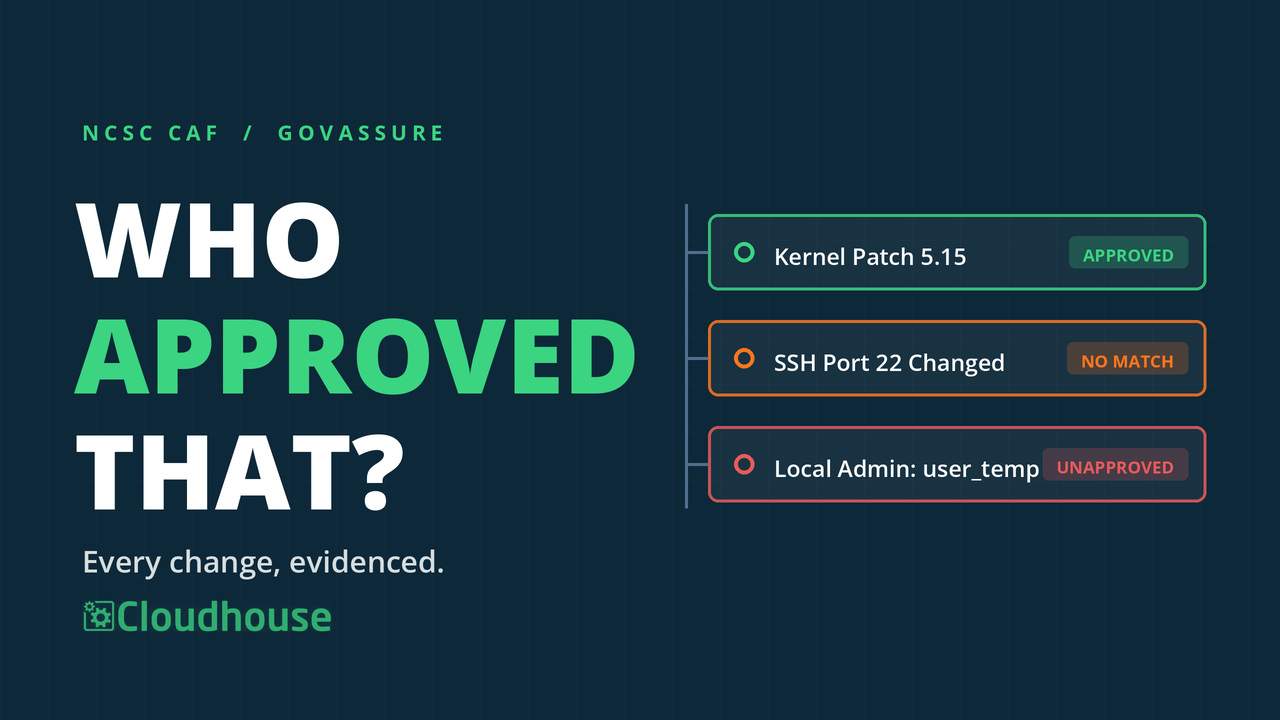
Most outages, audit failures and missed transformation events start with ‘one just one change’, and, specifically, a change that no one has noticed. This could be a small drifted configuration, a routine upgrade or an unauthorised patch by a third party. What seems fairly innocuous can lead to severe, customer-impacting incidents.
In an intense, competitive market where consumer expectations and regulator demands are continually evolving, there can be a pressure to implement change quickly. This forced modernisation increases risk before it reduces it, as it can lead to a greater amount of unmanaged change. And even if controls are in place, audits can fail due to a lack of evidence. What’s required is a far more proactive and ongoing approach to operational resilience.
Safely driving forward modernisation with provable control
The fact that Optus wasn’t aware of the outage for 13 hours points to the fact it lacked a central location of real-time visibility across its IT estate. Most failures are preventable by visibility and control. The problem with traditional audits, designed to mitigate events like outages, is that they capture a point-in-time snapshot – but real-world IT environments shift every day.
That’s why regulators want to see evidence of who changed what, when and with what impact. A large number of regulatory failures are now due to “evidence failures” instead of negligence or intent. There is an obligation for provable control, seen in regulations like DORA and emerging AI governance frameworks, demonstrating continuous oversight instead of retrospective explanations.
What is provable control? Essentially, IT teams need to be able to detect, assess and validate change in real time, automatically and continuously (instead of discovering issues after customers or regulators do). Evidence needs to be audit-ready and tamper-resistant for whenever it’s needed, something manual reporting and spreadsheets struggle to deliver.
Leveraging configuration monitoring tools such as Guardian allow organisations to constantly surface drift and unauthorised changes with audit-ready evidence. By establishing a real-time, consolidated view of an entire IT estate, empowering telcos to efficiently detect and monitor configuration issues and change wherever and whenever it takes place.
If telcos can make operational risk visible, provable and actionable, through the use of drift detection tools, they can ensure change doesn’t escalate into a critical business and consumer incident. With this visibility, they can then implement ongoing operational controls and significantly reduce the likelihood of outages.
A collective, trustworthy approach
Given how dependent society is on telco companies, there is always a need for collaboration and a collective learning of lessons. Outages can happen to anyone at any point. Publishing a detailed root cause analysis when they do occur can benefit the sector as a whole, whereas masking failures out of embarrassment increases the risk of future outages for the company in question and the wider sector. When lessons are shared, everyone benefits, and it also helps to rebuild trust.
Ultimately, trust comes from visibility. In modern IT, you cannot control what you cannot see – visibility is fundamental for preventing outages. Building live visibility empowers telcos to respond rapidly to incidents, achieve stronger audit outcomes and, crucially, maintain full oversight of changes happening in their IT infrastructure. When change is visible, telcos can upgrade their systems responsibly and without any damaging disruption.
Modernisation is critical for meeting evolving expectations and keeping the economy going – it just needs to be managed.
If you’re a telco company looking to gain visibility and provable control over your IT estate, contact us here.