Outages have been a growing and consistent form of operational risk in the UK financial sector. After a glitch to Barclays’ systems caused widespread disruption in 2025, a Treasury Committee report discovered that nine major UK banks and building societies recorded a noteworthy 33 days of unplanned downtime over the past two years. On top of this, 60-80% of outages are linked to change of misconfiguration alone.
The impact of this downtime extends far beyond a simple ‘systems issue’. As the Barclays debacle illustrated, outages quickly become customer-impacting business incidents, and the root cause is often the same: change occurring inside complex estates without consistent visibility or proof of control. This is a clear signal that operational resilience requires a far more proactive and ongoing strategy.
Coupled with these outages, our State of Technical Debt Report – a survey of Risk and Compliance Managers, IT leaders and CIOs across financial services, government, and manufacturing – revealed that 70% of organisations regularly experience configuration drift (when changes haven’t been recorded or authorised).
Unmanaged drift also increases the risk of repeat incidents. Industry benchmarks such as the DORA metrics show that organisations with higher change failure rates – the proportion of deployments that result in production issues such as outages or degraded service – experience significantly lower operational stability. In practice, poor control over change and configuration directly raises the likelihood of repeated outages.
As regulatory expectations around operational resilience continue to tighten, the ability to continuously detect and evidence drift is becoming a baseline requirement rather than a technical nice-to-have. So, with financial services facing mounting pressure to stabilise estates, demonstrate control and reduce operational risk, detecting configuration drift can be a critical tool in defending against outages in the year ahead.
How drift is a silent cause of risk
What the frequency of both outages and configuration drift points to is a widening control gap. Regulators, customers and investors expect IT teams to prove their resilience and compliance, yet many aren’t able to confidently evidence what’s changed, where, and if it was authorised or not. Simultaneously, CIOs, CTOs and Heads of Risk are under pressure to pass audits quickly while supporting continuous change. These gaps and pressures enable drift to act as a silent driver of operational and regulatory risk.
The majority of outages aren’t triggered by dramatic failure. Instead, they begin quietly – a small untracked change, a drifted configuration, or an unauthorised patch by a third party can all lead to major incidents. Moreover, many teams simply do not have the resources or adequate budgets to continuously monitor configuration drift; they often don’t even know it is happening. And when teams don’t have visibility over changes across their IT estates, resilience becomes guesswork and risk becomes invisible.
Against this backdrop of rising operational risk, we’ve launched the Drift Detection Audit, a structured way for organisations to understand what is actually changing across their environments.
Detect your drift with our new Drift Detection Audit
Drift detection closes the control gap by making operational risk visible, provable and actionable. With visibility across an IT estate, teams can ensure change doesn’t escalate into a critical business incident.
Our Drift Detection Audit is a new visibility and configuration-stability service designed to dramatically accelerate the detection of configuration issues across complex IT estates. The Audit combines our established monitoring and compatibility technologies to provide IT teams with a real-time, consolidated view of their estate.
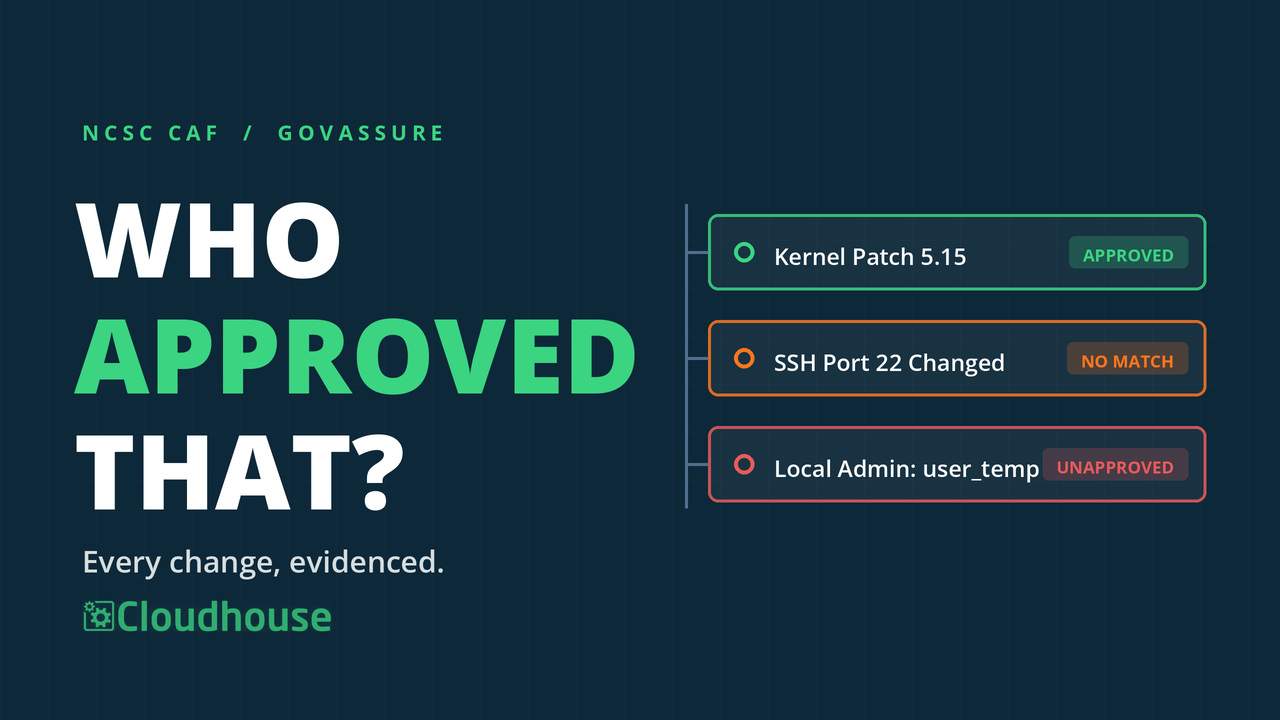
Powered by Guardian (our configuration-monitoring tool), the Audit continuously assesses configuration state at a cadence defined by the organisation, surfacing drift and unauthorised changes with audit-ready evidence. This empowers IT teams to move beyond reactive firefighting and establish ongoing operational control – reducing the likelihood of outages, compliance failures and escalating technical debt.
See configuration drift in action with Guardian Test Drive
Unless organisations can see and demonstrate the benefits of drift detection for themselves, turning awareness into action can be a hard sell to internal decision-makers. You most likely wouldn’t buy a car before a test drive, so why would you do the same with software?
That’s why we’re introducing Guardian Test Drive. Through this service, organisations can gain a time-limited, full-featured instance of the Guardian tooling and enable their teams to witness their own environment’s drift and dependencies in action before making a purchasing decision. We know that to understand the benefits of visibility, you have to be able to see them for yourself first.
Ultimately, in modern IT environments, you can’t control what you can’t see. Most failures arise from a lack of control and visibility. Therefore, without gaining these capabilities, outages will continue to pose a major threat to the UK financial services sector and its customers.
But by offering organisations a glimpse into drift detection, we can help them see how ongoing visibility drives quicker incident response times, strong audit outcomes and complete oversight over any change happening in their IT estate – and, above all, how this visibility underscores trust, privacy and resilience.
Organisations can now access a free Drift Detection Audit here to assess configuration drift, legacy exposure and transformation challenges across their environments.